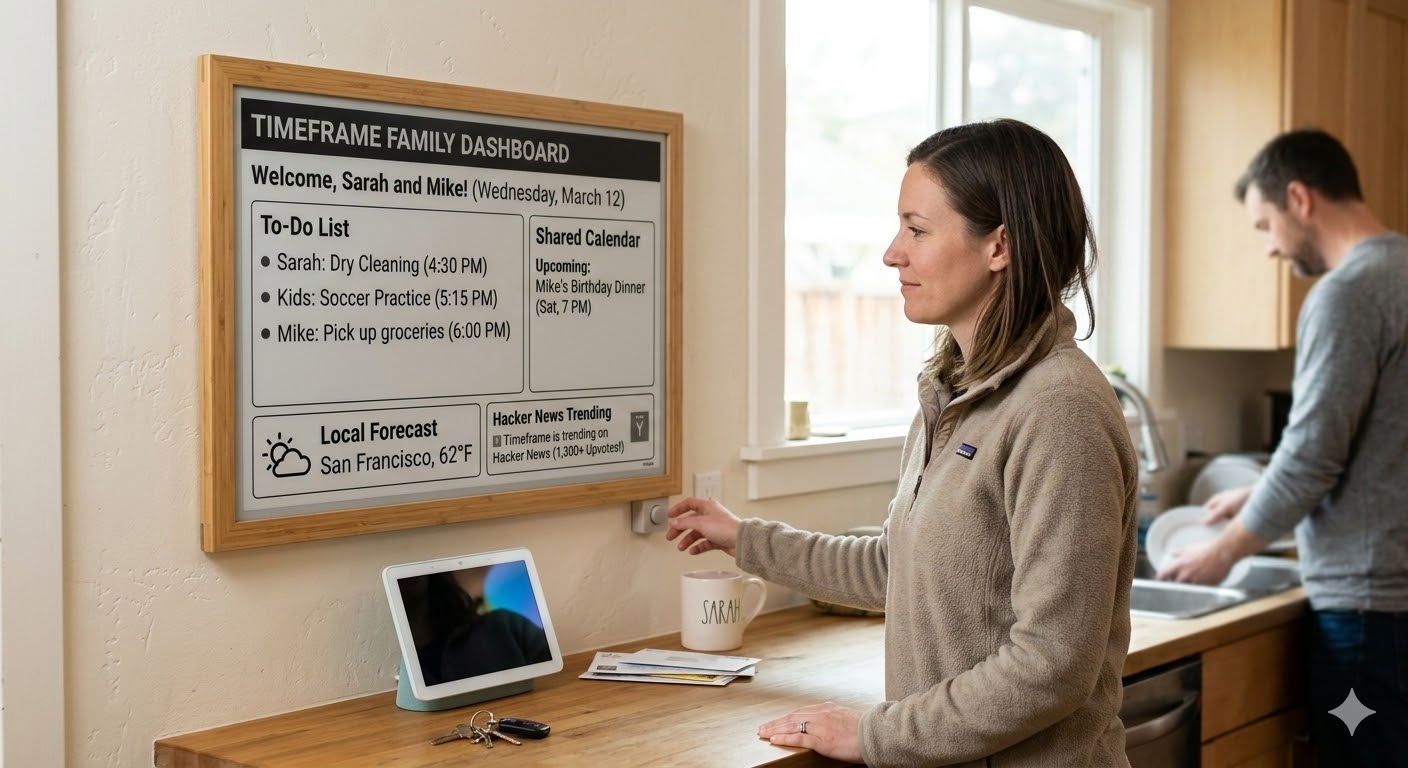
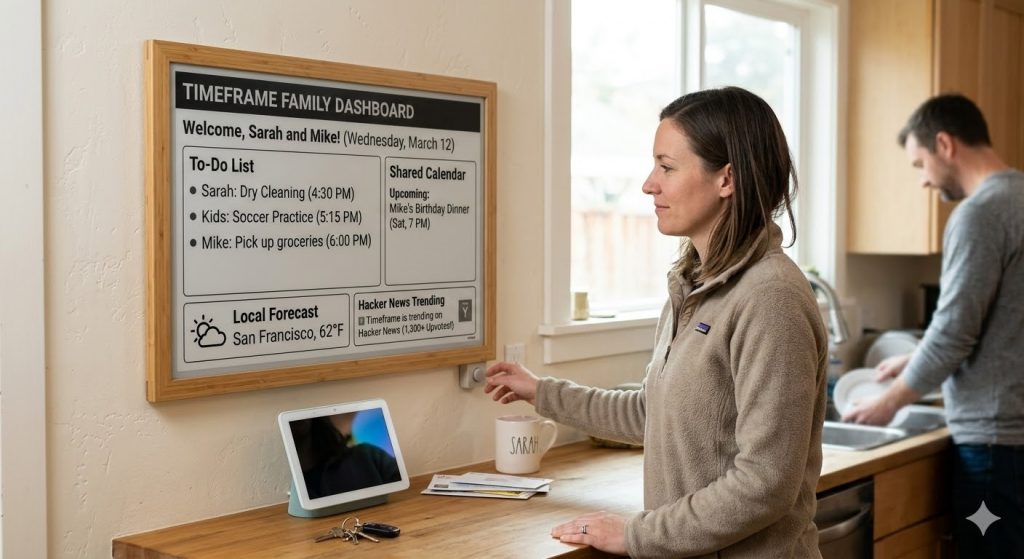
A developer’s custom e-paper family dashboard called Timeframe is exploding on Hacker News with over 1,300 upvotes. It’s exactly what commercial smart displays have been missing – and frankly, it makes me want to ditch my Google Hub.
Why E-Paper Changes Everything for Family Displays
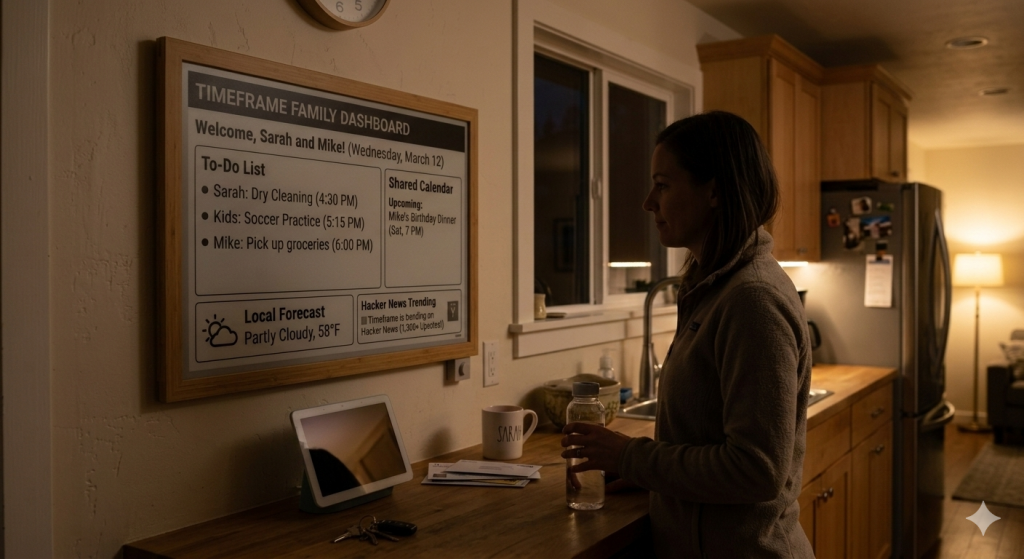
Let’s be honest – most smart displays are complete overkill for what families actually need. You don’t need a bright, power-hungry LCD screen blasting your calendar at you 24/7. What you need is something that looks natural, updates when necessary, and doesn’t feel like another intrusive gadget demanding attention.
That’s exactly what makes this Timeframe project so brilliant. E-paper displays have that newspaper-like quality that just feels right in a home environment. They’re readable from any angle, use virtually no power when not updating, and won’t blind you when you stumble past them at 2 AM looking for water.
I’ve been watching the smart display market for years, and honestly, most products miss this fundamental point. Amazon’s Echo Shows and Google’s Nest Hubs are trying to be entertainment devices first, information displays second. But what families really need is the opposite – a calm, persistent view of what matters most.
The technical specs here aren’t revolutionary, but the approach absolutely is. By choosing e-paper over traditional displays, this developer solved the biggest problem with family dashboards: they become part of the background instead of fighting for your attention.
The DIY Advantage Over Commercial Solutions
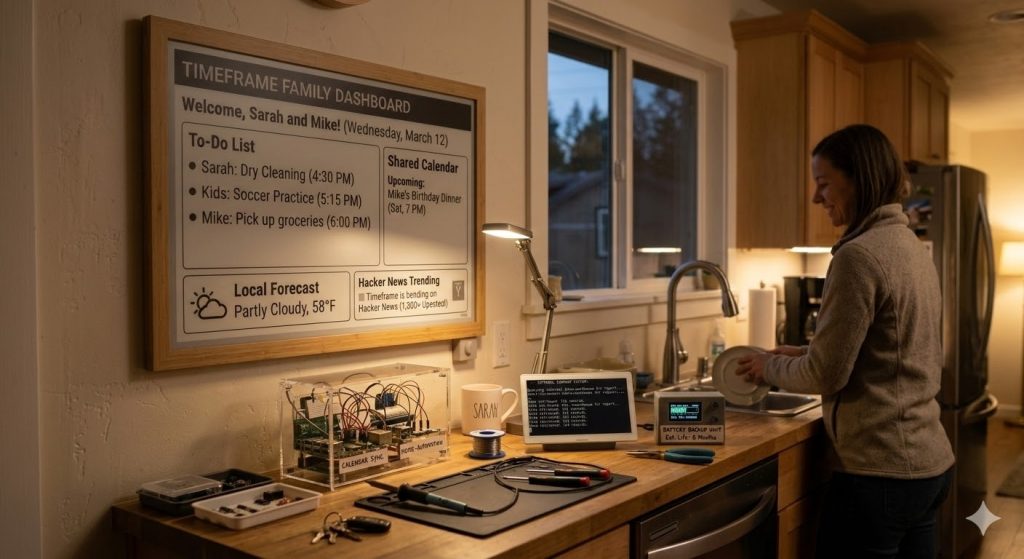
Here’s what’s really interesting about this project – it’s not trying to be everything to everyone. Commercial smart displays suffer from feature creep because companies need to justify premium pricing. You end up with devices that can stream Netflix, control your lights, show photos, play music, and oh yeah, maybe display your calendar if you dig through enough menus.
Timeframe takes the opposite approach. It does a few things incredibly well: shows your family schedule, displays useful information, and stays out of your way. That focused simplicity is something you literally cannot buy from Google or Amazon because it doesn’t fit their business model of selling you more services.
The customization possibilities here are endless, which is another huge advantage. Want to integrate with your specific home automation system? Easy. Need to display information from a work tool that doesn’t have commercial integrations? No problem. Try getting your Google Hub to show data from your company’s internal systems – good luck with that.
What’s even better is the total cost of ownership. E-paper displays use so little power that you could run this thing for months on a battery. Compare that to smart displays that need constant power and will inevitably slow down or stop getting updates after a few years.
The Technical Implementation That Actually Works
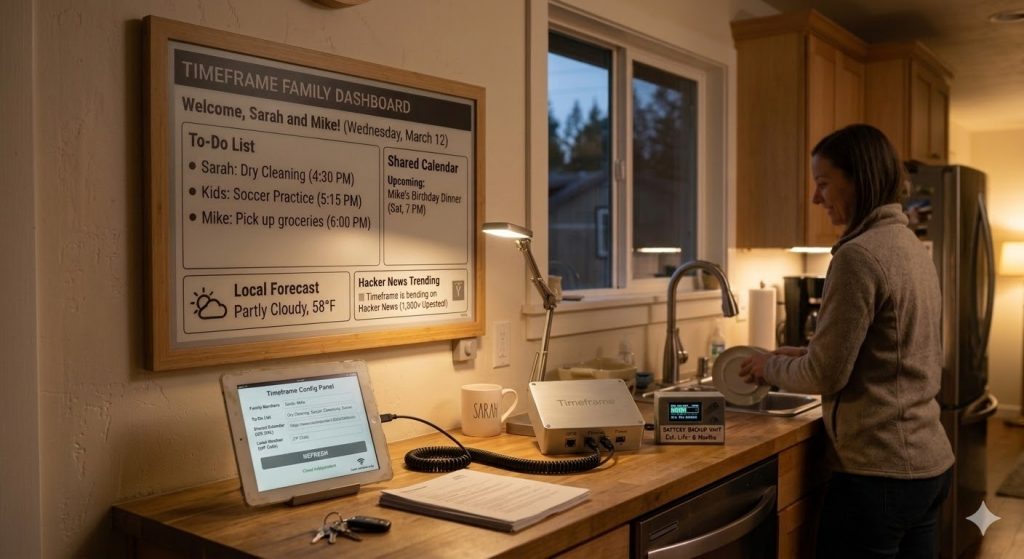
The beauty of this project isn’t just in the concept – it’s in the execution. The developer chose tried-and-true technologies that regular people can actually replicate. We’re talking Raspberry Pi, Python scripts, and standard APIs. No exotic hardware, no proprietary protocols, just solid engineering that works.
What impresses me most is the refresh strategy. E-paper displays are notoriously slow to update, but for a family dashboard, that’s actually perfect. Your calendar doesn’t need to refresh every second. Weather updates every few hours are fine. This constraint forces better information design – you focus on what actually matters instead of flashy animations that serve no purpose.
The web-based configuration interface is smart too. Instead of building a complex mobile app, everything runs through a simple web page. That means no app store approval process, no separate mobile development, and no compatibility issues across different phones and tablets.
From an infrastructure standpoint, this approach is bulletproof. Local processing means it keeps working even when your internet goes down. No cloud dependencies, no subscription fees, no worries about some company deciding to sunset the service and brick your device.
What This Means for the Smart Home Future
I think this project represents something bigger than just one clever dashboard. It’s part of a growing pushback against the “everything device” mentality that’s dominated smart home tech for the past decade. People are getting tired of gadgets that do too much, poorly, and want focused tools that do specific jobs exceptionally well.
The response on Hacker News tells the whole story – over 1,300 upvotes and hundreds of comments from people sharing their own implementations and improvements. That level of engagement doesn’t happen for yet another commercial smart display announcement. It happens when something genuinely solves a real problem.
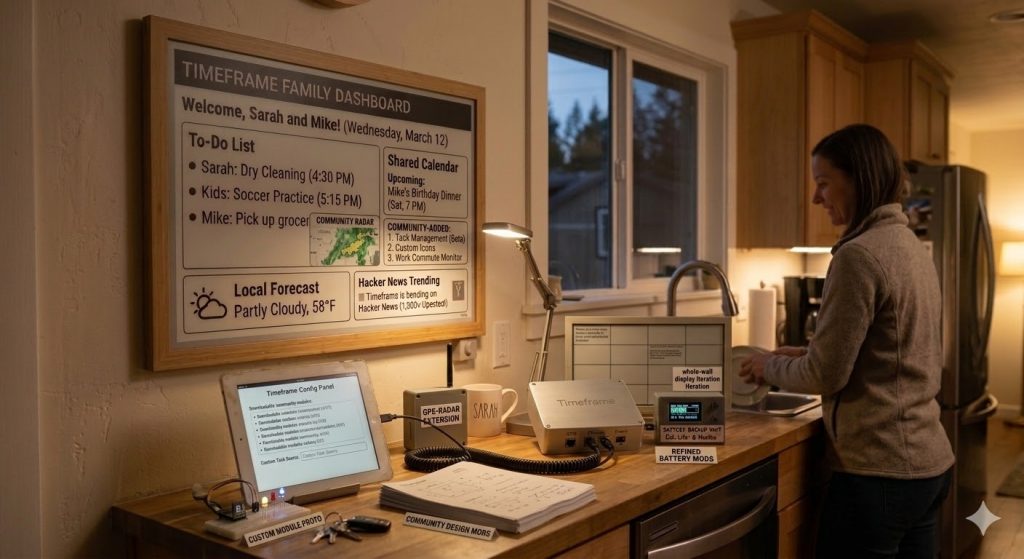
What’s particularly encouraging is seeing developers share their modifications and extensions. Some are adding weather radar, others are integrating task management systems, and a few are experimenting with larger displays for whole-wall installations. This is what real innovation looks like – not corporate product launches, but community-driven iteration on practical solutions.
The commercial smart display companies should be paying attention here. There’s clearly demand for simpler, more focused devices that prioritize information over entertainment. E-paper technology is getting cheaper and more accessible every year. Someone’s eventually going to build a polished, consumer-ready version of this concept and make a fortune.
If you’ve been frustrated with overly complex smart displays or considering building your own family information hub, Timeframe proves that simpler solutions often work better. The project files are available, the community is active, and e-paper displays are more affordable than ever. Sometimes the best technology isn’t the most advanced – it’s the most thoughtfully designed for real human needs.