
The Classic Hardware Support Problem
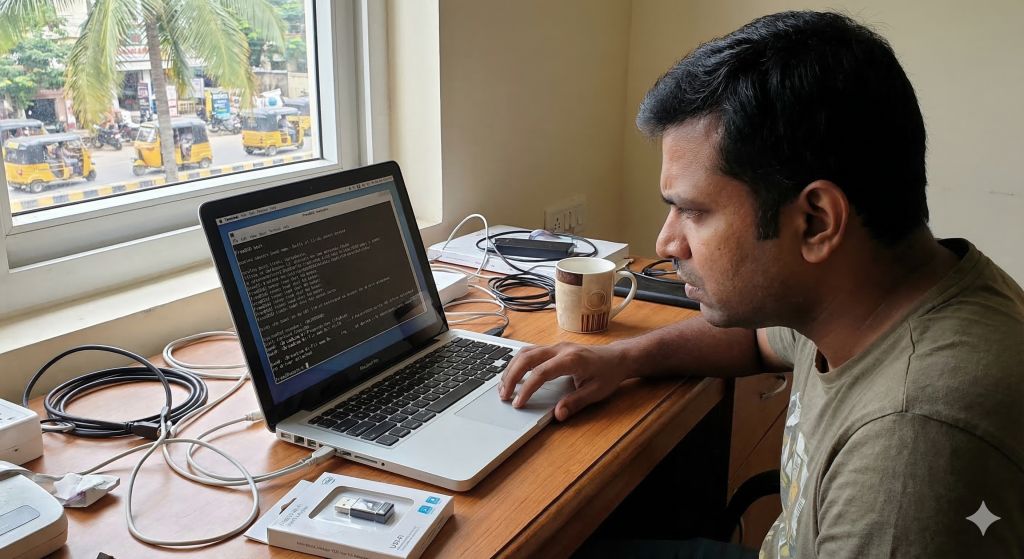
Here’s a story every Linux and BSD user knows by heart: you install your favorite operating system, everything boots perfectly, then you realize your Wi-Fi card isn’t supported. It’s the eternal struggle of alternative operating systems—hardware manufacturers don’t write drivers for niche platforms.
This particular tale involves a developer trying to breathe new life into an aging MacBook by installing FreeBSD. The machine ran beautifully except for one crucial detail: the Broadcom Wi-Fi chip had zero driver support. We’re talking about a complete dead end here.
What’s interesting is how this represents the broader challenge facing open source operating systems. While Linux has made tremendous strides in hardware compatibility, FreeBSD and other BSD variants still face significant gaps. Apple’s tight control over hardware documentation makes this even trickier for older MacBooks.
The traditional solution would be hunting down USB Wi-Fi dongles or hoping someone in the community eventually reverse-engineers a driver. Both options are frustrating and time-consuming for users who just want their machine to work.
When Code Generation Meets Hardware
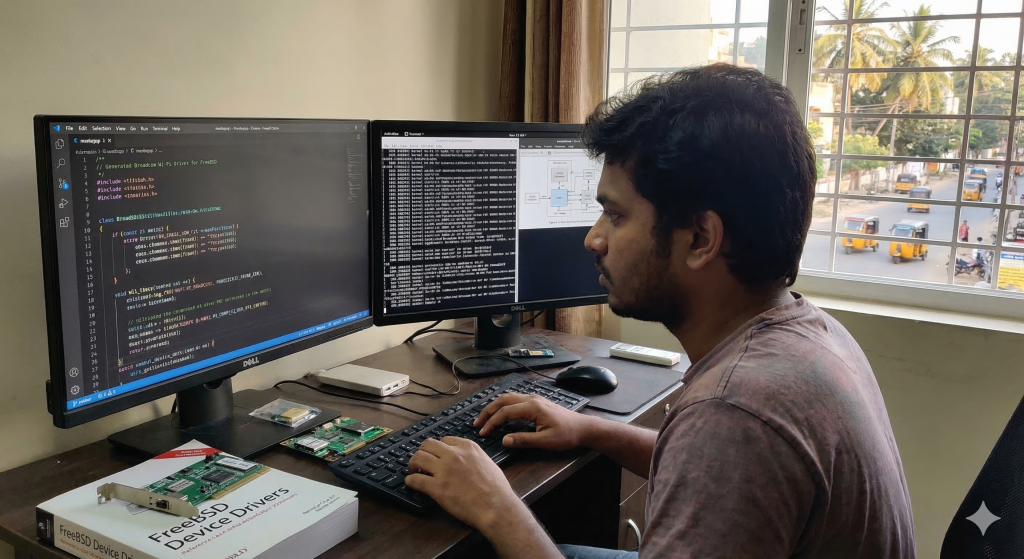
The developer decided to try something unconventional: using modern code generation tools to create the missing driver. This isn’t your typical ‘copy-paste from Stack Overflow’ situation—we’re talking about generating actual kernel-level hardware drivers.
I think what makes this fascinating is the technical complexity involved. Device drivers operate at the lowest levels of the operating system, directly interfacing with hardware registers and interrupt handlers. Getting this wrong can crash your entire system or worse.
The process involved feeding existing driver code patterns and hardware specifications into the generation system, then iteratively refining the output. It’s like having an extremely knowledgeable programming assistant that never gets tired of debugging obscure kernel panics.
Here’s the thing though—this approach only works because there’s already a wealth of similar driver code to learn from. Broadcom Wi-Fi chips share common architectures across generations, so the patterns are fairly well-established in existing open source drivers for related hardware.
The Technical Reality Check

Let’s be honest about what actually happened here. The generated driver wasn’t a magical solution that worked perfectly on the first try. Like any kernel development project, it required significant debugging, testing, and refinement to handle edge cases.
What’s genuinely impressive is that the initial generated code provided a solid foundation that actually compiled and showed signs of life. Anyone who’s worked on driver development knows that getting to ‘hello world’ level functionality can take weeks of reading datasheets and reverse-engineering.
The real breakthrough isn’t that the code was perfect—it’s that it accelerated the most tedious parts of driver development. Setting up the basic framework, handling standard initialization routines, and implementing common Wi-Fi stack interfaces are largely boilerplate that follows predictable patterns.
I’ve seen seasoned kernel developers spend months on similar projects. Having a tool that can generate the scaffolding and handle the repetitive parts means more time for the actually creative problem-solving work that humans excel at.
What This Means for Open Source Development

This story points to something bigger happening in open source development. The traditional barrier to entry for kernel-level programming has been the sheer amount of specialized knowledge required. Code generation tools are starting to democratize access to these complex domains.
For BSD and Linux distributions, this could be a game-changer for hardware support. Instead of waiting years for community developers to reverse-engineer drivers, we might see much faster turnaround times for supporting new hardware generations.
The competitive implications are interesting too. Hardware manufacturers have historically used driver availability as a way to steer users toward specific operating systems. If driver development becomes significantly easier, that leverage diminishes.
What’s really exciting is thinking about this beyond just Wi-Fi drivers. Graphics cards, audio interfaces, specialized peripherals—there’s a massive long tail of hardware that remains poorly supported simply because writing drivers is so labor-intensive. This approach could finally start closing those gaps at scale.
We’re witnessing the early stages of how modern development tools will reshape systems programming. While this MacBook Wi-Fi driver might seem like a small victory, it represents a fundamental shift in how we approach the traditionally arcane world of kernel development. The question isn’t whether these tools will transform open source hardware support—it’s how quickly the community will adapt and what becomes possible when driver development is no longer such a specialized bottleneck.